



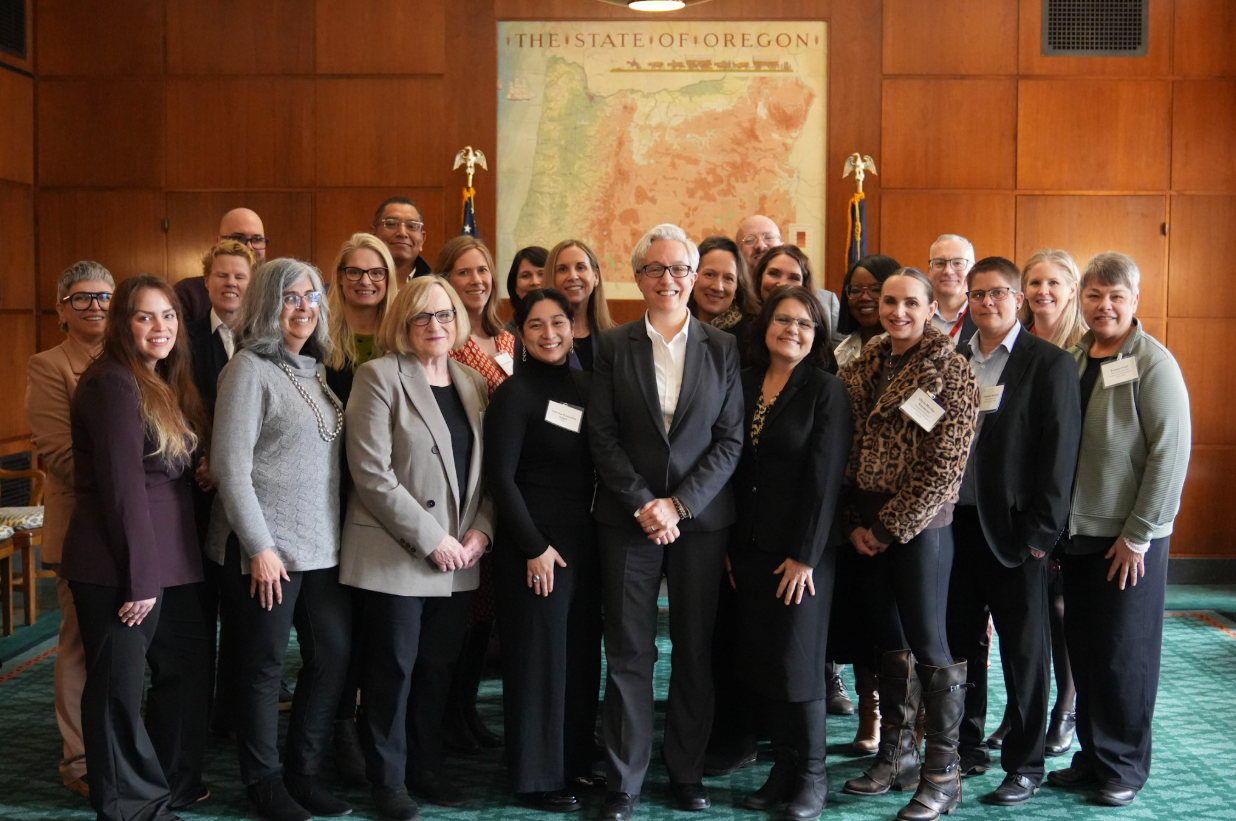
New Narrative CEO Julie Ibrahim recently joined behavioral health partners at the Oregon State Capitol to advocate for and celebrate HB 4083, the first bill to emerge from the Governor’s Behavioral Health Talent Council where Julie served as vice co-chair starting in June of 2025.
The changes brought forth by HB 4083, which was signed into law earlier this month, focus on reducing barriers in the behavioral health workforce that contribute to delays in accessing care in Oregon.
New Narrative CEO Julie Ibrahim joined behavioral health partners at the Oregon State Capitol recently to advocate for and celebrate HB 4083, the first bill to emerge from the Governor’s Behavioral Health Talent Council where Julie served as vice co-chair for the past eight months. The bill was signed into law in early March 2026.
The day included meetings with state legislators as well as a reception hosted by Governor Tina Kotek and First Lady Aimee Kotek Wilson, recognizing eight months of collaborative work by providers, educators, licensing bodies, and state agencies. The Council’s final report outlines 17 action plans with 74 strategies to strengthen Oregon’s behavioral health workforce, with HB 4083 serving as an important first step toward implementation.
The impact of HB 4083
HB 4083 focuses on reducing barriers that slow access to care. Key provisions include creating a centralized payer credentialing system to speed the hiring of behavioral health professionals, formally committing the Oregon Health Authority to reduce unnecessary administrative burdens for Medicaid providers, and expanding access to clinical supervision by allowing qualified supervisors to oversee associates across licensure types.
Together, these changes are designed to help clinicians enter the workforce more quickly, spend less time on paperwork, and ultimately improve timely access to behavioral health services. The Talent Council will continue meeting in 2026 to advance additional policy solutions.